The OSIRIS-REx Mission
OSIRIS-REx (Origins, Spectroscopy, Interpretation, Resource Identification, Security–Regolith Explorer) is one of NASA's most ambitious planetary science missions. Launched in 2016, this groundbreaking spacecraft journeyed to asteroid Bennu, collected pristine samples from its surface, and safely returned them to Earth in September 2023.
Mission Overview
The primary goal of OSIRIS-REx is to investigate the formation and evolution of our solar system by studying a carbonaceous asteroid. Bennu, a 500-meter near-Earth asteroid, is an ideal target: ancient, pristine, and accessible. Its composition reflects materials from the early solar system, approximately 4.5 billion years old.
Beyond science, the mission serves a critical planetary defense purpose. By visiting and studying Bennu—a near-Earth object with a small but non-zero probability of Earth impact in the 22nd century—OSIRIS-REx helps refine our understanding of asteroids and informs strategies to protect our planet.
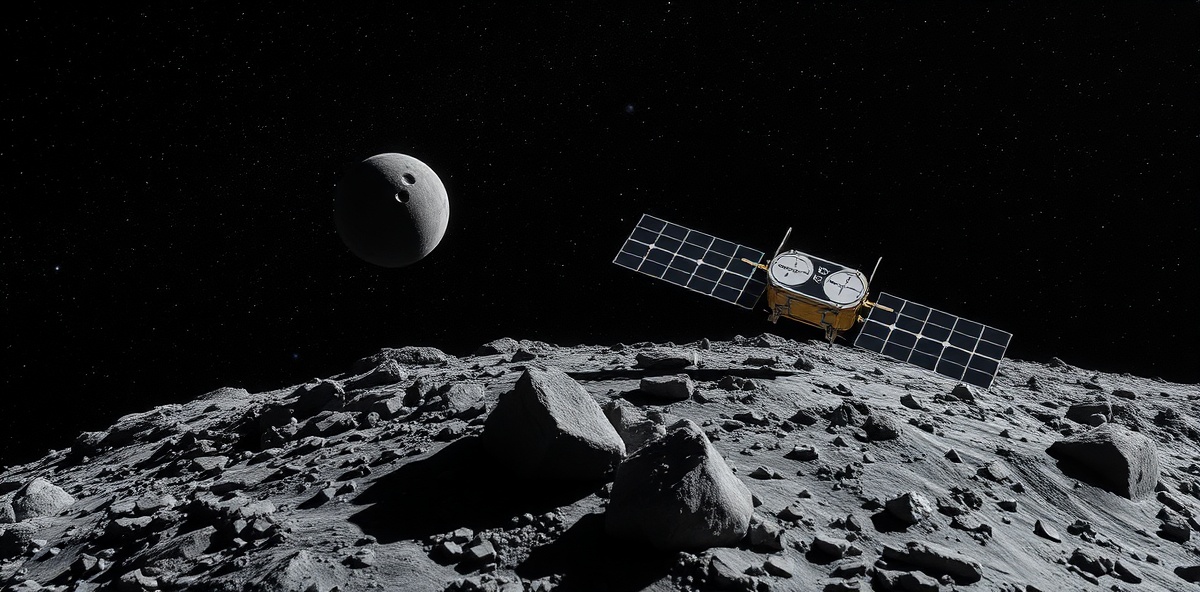
Launch
OSIRIS-REx launches from Cape Canaveral Air Force Station aboard an Atlas V rocket, beginning its seven-year journey to asteroid Bennu. The spacecraft carries a suite of scientific instruments and the TAGSAM sample collection mechanism.
Bennu Arrival
After a 2-year journey, OSIRIS-REx reaches Bennu. The spacecraft enters orbit and begins detailed reconnaissance, revealing an unexpectedly rugged, boulder-filled terrain unlike anything previously imagined for such a small asteroid.
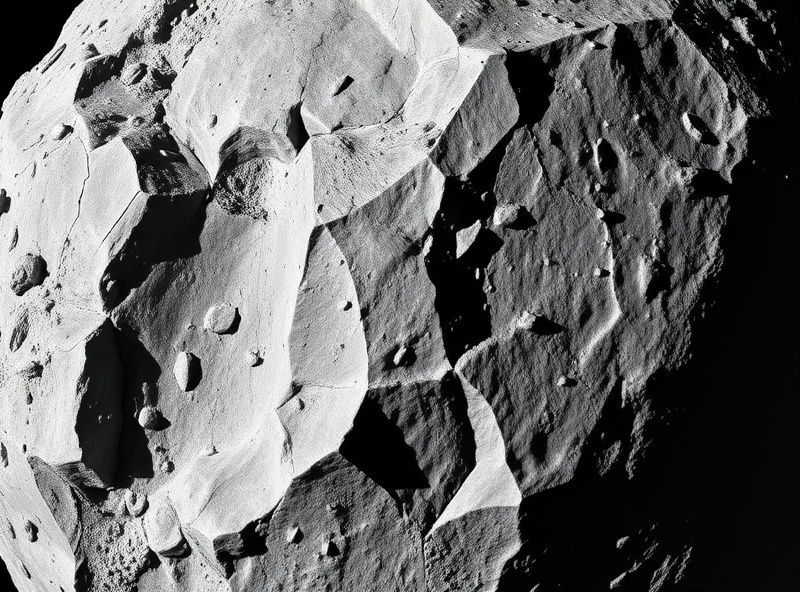
Historic Sample Collection (TAG Event)
The TAGSAM descends to Bennu's surface and executes a flawless touch-and-go maneuver. Compressed nitrogen gas stirs up regolith, and 121.6 grams of material is collected in the sample head—far exceeding the 60-gram mission goal. The success surpasses all expectations.

Return Journey
With samples safely stowed in the sample return capsule, OSIRIS-REx departs Bennu's orbit and begins its two-year journey home. The spacecraft performs extended asteroid science observations during the cruise phase.
Sample Return to Earth
The sample return capsule lands in the Utah desert after a fiery re-entry through Earth's atmosphere. The pristine Bennu samples are collected and immediately transferred to NASA's curatorial facility for study and long-term preservation.

Analysis & Discovery
Scientists worldwide conduct in-depth analysis of the Bennu samples using advanced techniques including mass spectrometry, isotope analysis, and microscopy. Early 2024 discoveries include amino acids, nucleobases, water-bearing minerals, and abundant presolar dust grains. In June 2024, analysis revealed magnesium-sodium phosphate minerals—a key finding indicating low-temperature aqueous alteration of Bennu's parent body.

Water-Rich Parent Body Evidence
Detailed laboratory analysis of Bennu samples suggests the asteroid's parent body harbored a water-rich interior with aqueous alteration. The presence of magnesium phosphate minerals and phyllosilicates indicates circulation of alkaline fluids—a process analogous to hydrothermal systems. These findings suggest early solar system asteroids provided conditions potentially conducive to complex chemistry.
OSIRIS-APEX: Apophis Encounter
The repurposed OSIRIS-REx spacecraft, now designated OSIRIS-APEX, reaches asteroid Apophis during its historic close approach to Earth. The spacecraft conducts detailed observations from a safe distance as Apophis passes within the orbit of geosynchronous satellites.
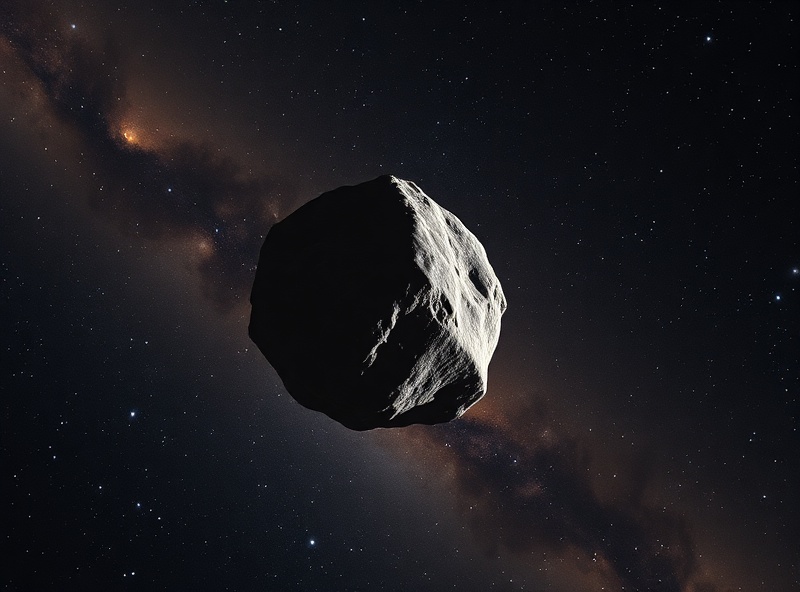
The Spacecraft
OSIRIS-REx is a sophisticated spacecraft designed to safely approach, study, and sample an asteroid. Its design is carefully engineered for durability, precision, and scientific excellence.
Key Instruments:
- OCAMS: Optical Cameras imaging system for navigation and scientific observation
- OLA: Laser altimeter for high-resolution surface mapping
- OTES: Thermal emission spectrometer for compositional analysis
- OVIRS: Visible/infrared spectrometer detecting organic compounds and minerals
- REXIS: X-ray spectrometer studying elemental composition
Dimensions & Power:
- Height: 3.2 meters | Diameter: 2.4 meters
- Mass at launch: 2,110 kg | Solar arrays: 80 square meters
- Power generation: Up to 6.7 kW from sunlight
The TAGSAM Sampling Mechanism
TAGSAM (Touch-And-Go Sample Acquisition Mechanism) is the spacecraft's most critical instrument. This robotic arm extends down to Bennu's surface, makes brief contact, and uses compressed nitrogen gas to stir up surface material, which is then collected in a sample head. The collected material is sealed in a return capsule for the journey home.
The sample return capsule is a specialized heat shield designed to protect the pristine samples during re-entry through Earth's atmosphere, ensuring they arrive uncontaminated for scientific analysis.
OSIRIS-APEX: The Extended Mission
After successfully delivering the Bennu samples to Earth, OSIRIS-REx was renamed OSIRIS-APEX (Origins, Spectroscopy, Interpretation, Resource Identification, Security–Apophis Explorer) and repurposed for a new mission to asteroid Apophis.
Apophis is a near-Earth asteroid that will make an exceptionally close approach to Earth in 2029—passing inside the orbit of geosynchronous satellites. This unprecedented encounter presents a unique opportunity to study another primitive asteroid and refine planetary defense strategies.
The OSIRIS-APEX mission will arrive at Apophis in April 2029 to conduct detailed observations, contributing crucial data for planetary protection and our understanding of asteroid diversity.