Meet Bennu
Asteroid (101955) Bennu is a near-Earth, carbonaceous asteroid discovered in 1999. At just 500 meters in diameter, this ancient world has become the focus of intense scientific study and the centerpiece of NASA's OSIRIS-REx mission.
What Is Bennu?
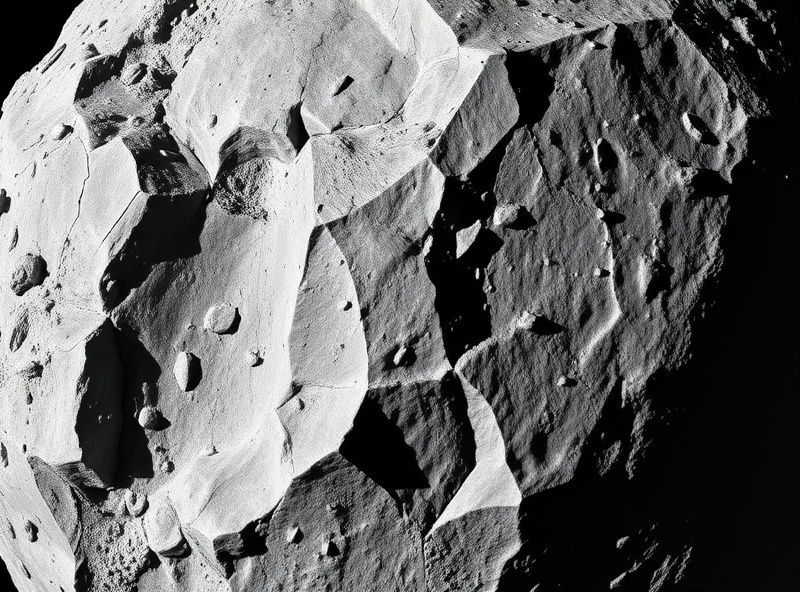
Bennu is a rubble-pile asteroid—not a solid rock, but a collection of boulders held together by gravity and weak cohesive forces. Its surface is remarkably rugged, covered in craters, boulders, and rocky terrain. Unlike the smooth, homogeneous asteroids once imagined by scientists, Bennu's landscape is complex and dynamic.
The asteroid's composition is primitive and carbonaceous, meaning it is rich in carbon-bearing minerals and organic compounds. This composition reflects the chemistry of the early solar system, making Bennu a time capsule from our cosmic past.
Bennu was named by a 9-year-old student from North Carolina. In ancient Egyptian mythology, Bennu is a bird associated with the sun and resurrection—a fitting name for an asteroid that may have brought the seeds of life to Earth.
Physical Profile

Mean diameter
Orbital speed around the Sun
Years orbital period
Density (g/cm³) – porous, low density
Estimated rotation period (hours)
Surface gravity (0.0000053g)
Surface & Geology
Bennu's surface is surprisingly dynamic and heterogeneous. When OSIRIS-REx arrived, scientists were amazed to find:
- • Boulder Fields: Regions covered in large, unweathered boulders, some meters across.
- • Craters & Ridges: Impact craters and ridges revealing subsurface geology.
- • Regolith: Loose surface material and dust covering some regions, revealing the asteroid's ancient origin.
- • Bright Patches: Areas of lighter-colored material, possibly representing compositional variations or exposed fresh rock.
The diversity of Bennu's surface suggests a complex history of impacts, erosion, and material transport.

Ocean World Heritage: A Wet Asteroid
One of the most profound discoveries from the Bennu samples is the presence of magnesium phosphate minerals. As of February 2026, this finding has taken on new significance: it confirms that Bennu's parent body may have harbored liquid water environments similar to an ocean world—an asteroid with a global subsurface ocean and alkaline hydrothermal vents, strikingly similar to Saturn's moon Enceladus.
Magnesium Phosphate: Proof of Hydrothermal Systems
The presence of magnesium phosphate in the Bennu samples is a smoking gun. This mineral forms when alkaline fluids (rich in magnesium and phosphate ions) interact with rock in hydrothermal vents. On Earth, such vents teem with life. On Bennu's parent body billions of years ago, similar chemistry was unfolding in the asteroid's interior.
Phosphate is essential for life—it's a key component of ATP (cellular energy) and DNA/RNA. The fact that phosphate-rich minerals formed through water-rock interaction on Bennu's parent body means that the asteroid was actively concentrating and preparing one of life's most essential elements.
A Bridge to Enceladus
The chemistry found in Bennu samples draws a striking parallel to Enceladus, Saturn's icy moon. Both bodies show evidence of:
- • Subsurface oceans of liquid water
- • Alkaline hydrothermal vents
- • Phosphate-rich minerals from water-rock interaction
- • Complex organic chemistry in the environment
This means that Bennu's parent body 4.5 billion years ago had the same chemical recipe for life as Enceladus does today. If life emerged on one, conditions were suitable on the other.
Why This Matters: The discovery that ancient asteroids hosted habitable environments—with liquid water, chemical energy, and essential nutrients—suggests that habitable chemistry may have been widespread throughout the solar system. Enceladus, Europa, and other ocean worlds today may harbor similar conditions to those Bennu's parent body experienced billions of years ago.
Bennu & Earth: A Close Relationship
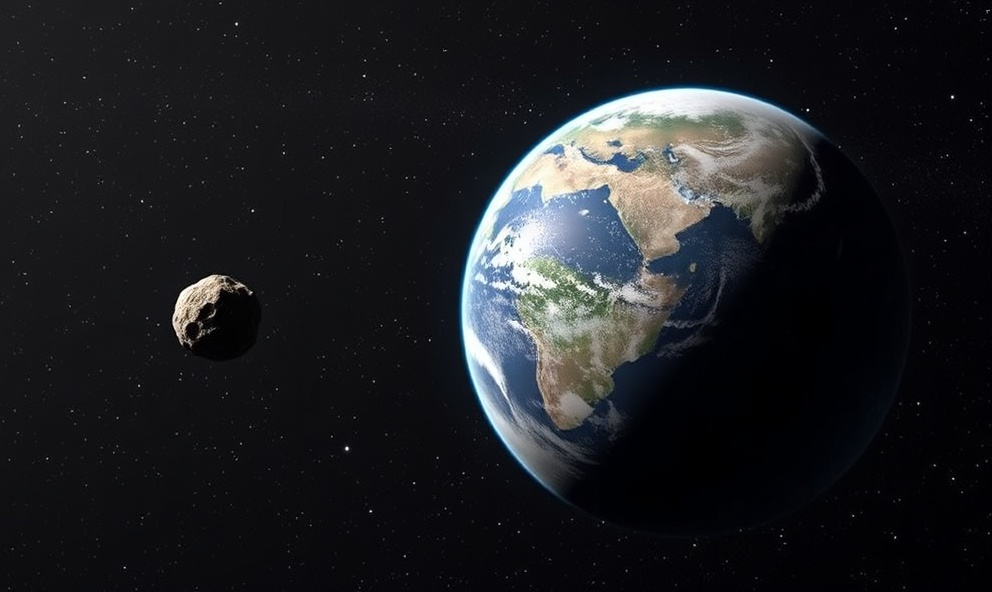
Bennu is classified as a near-Earth asteroid (NEA)—an object whose orbit brings it relatively close to our planet. This proximity has both scientific and planetary defense implications.
Impact Probability
Recent observations from OSIRIS-REx refined our understanding of Bennu's orbit. The data shows:
- Current risk: No impact threat for at least the next 300 years
- 22nd century: Bennu may approach Earth in 2175-2199
- Impact probability: Less than 1-in-2700 chance (>99.94% safe)
- Closest approach: Could come within 800,000 km (2× Earth-Moon distance)
While the risk is extremely low, Bennu is the most tracked asteroid for impact monitoring, making it a valuable test case for planetary defense.
Planetary Defense
By visiting and studying Bennu, OSIRIS-REx has provided crucial data for understanding asteroid compositions, orbits, and hazard assessment. This information directly informs strategies to protect Earth from asteroid impacts.