Water Found in Bennu: Evidence of an Ancient Ocean World
Analysis of the OSIRIS-REx Bennu samples reveals clear evidence that the asteroid's parent body harbored liquid water in the early solar system.
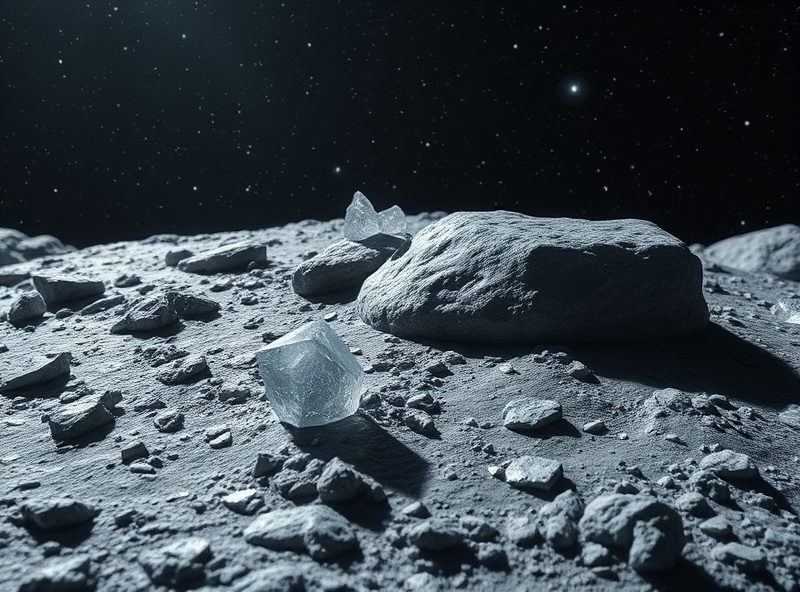
Water—the universal solvent and essential ingredient for all known life—was not rare in the early solar system. Analysis of minerals in the Bennu samples shows clear evidence that the asteroid's parent body was an ocean world, rich with liquid water that chemically altered the asteroid's minerals.
The Evidence
Scientists identified several key indicators of ancient water:
- • Hydrated Silicates: Clay minerals that only form in the presence of liquid water. These phyllosilicates are abundant in the Bennu samples.
- • Magnesium-Sodium Phosphate: A mineral found in the Bennu samples that indicates water-rock interactions at moderate temperatures.
- • Carbonate Minerals: Products of water-rock reactions in an aqueous environment.
"The minerals tell a clear story," explains Dr. Maria Walsh, lead author of the water analysis paper. "The parent body of Bennu had liquid water, and that water was in contact with the rock. This wasn't a dry, airless asteroid—it was a geologically active world with oceans or subsurface brines."
When Did This Happen?
Isotopic analysis places the water-rock interactions early in the solar system's history—within the first few million years. This was before Earth had even fully cooled and solidified. The parent body was large and geologically active, with enough internal heat from radioactive decay to maintain liquid water in a subsurface ocean or layered hydrothermal system.
Implications for Life
Water is essential for chemistry of life. It dissolves nutrients, facilitates chemical reactions, and provides the medium in which complex molecules can organize and interact. The presence of abundant water in Bennu's parent body—combined with the rich organic molecules found in the samples—suggests that the chemical conditions necessary for life were present in the asteroid belt of the early solar system.
If such water-rich, organic-rich asteroids collided with early Earth, they would have delivered not just material, but a ready-made chemistry for life. This may have accelerated the origin of life on our planet.
Beyond Bennu
Bennu is not alone. Other carbonaceous asteroids, meteorites found on Earth, and samples from the Moon and Mars all show evidence of ancient water interactions. This suggests that water was widespread in the early solar system, distributed across many small bodies and planets.
If water was common in our solar system, it may be common in other planetary systems around other stars. This thought raises profound questions: How many exoplanets harbor liquid water? How many have the right conditions for life?