Presolar Dust Reveals Ancient Cosmic Origins
New analysis of Bennu samples reveals the presence of pristine presolar dust grains—stardust from supernovae that predates our entire solar system by billions of years.
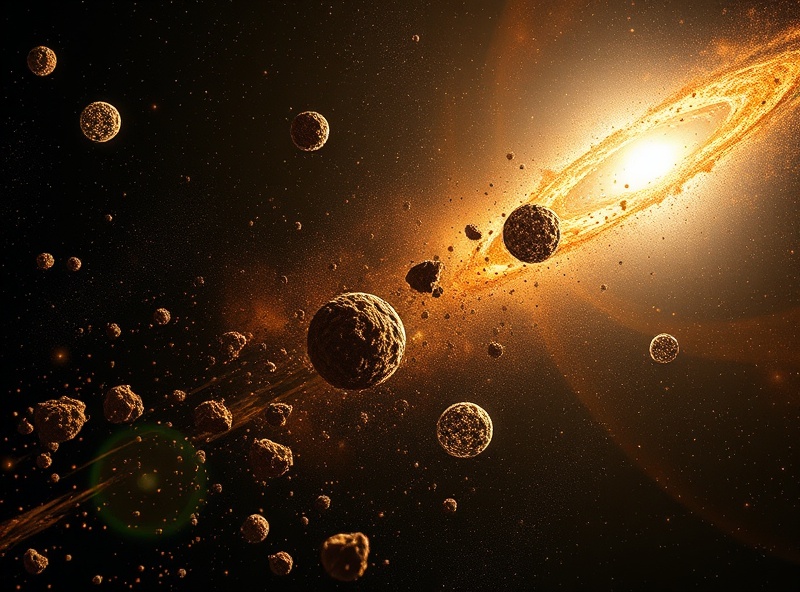
Among the most extraordinary findings in the Bennu samples is the presence of presolar dust grains—tiny particles of material that formed in the atmospheres of dying stars billions of years before our solar system even existed. These grains, preserved in pristine condition within the asteroid, offer an unparalleled window into the chemistry and history of our galactic neighborhood.
"These grains are older than our solar system," explains Dr. Sarah Chen, lead analyst of the presolar materials. "We're holding material that was born in supernovae, traveled through interstellar space, and became incorporated into Bennu's parent body. It's like holding a piece of cosmic archaeology in your hands."
What Are Presolar Grains?
Presolar grains are microscopic dust particles that condensed in the expanding envelopes of evolved stars—particularly in supernovae explosions. These grains contain isotopic ratios that differ markedly from solar system material, allowing scientists to identify them definitively as having an extrasolar origin.
The Bennu samples contain multiple types of presolar grains, including:
- • Silicon carbide (SiC): Grains that condensed in the atmospheres of carbon-rich asymptotic giant branch (AGB) stars
- • Graphite: Carbon-rich dust formed in stellar winds and supernovae
- • Oxides: Including corundum and spinel, formed in oxygen-rich stellar environments
- • Silicates: Complex minerals that reveal detailed isotopic fingerprints of their stellar origins
Dating the Universe Through Dust
By analyzing the isotopic composition of presolar grains, scientists can determine when they formed—and in some cases, identify the specific stellar event that produced them. Some grains in the Bennu samples are estimated to be 7 billion years old, making them more than 2 billion years older than our solar system (4.6 billion years old).
"These grains provide a cosmic clock," notes Dr. Chen. "They tell us about nucleosynthesis in dying stars, about supernova yields, and about the composition of the interstellar medium during different epochs of galactic history."
A Record of Stellar Deaths
The presolar grains in Bennu samples encode information about the stars that produced them. Isotopic ratios of elements like neon, magnesium, silicon, and sulfur reveal the temperature and composition of the stellar environments where the grains condensed. Some grains clearly originated in Type II supernovae (the deaths of massive stars), while others formed in lower-mass AGB stars.
By studying these grains, astronomers gain insights into stellar nucleosynthesis—the process by which stars create the heavy elements (carbon, oxygen, silicon, iron, and beyond) that make up planets and life. Every atom in your body heavier than helium was forged in a star. These presolar grains are a direct sample of that cosmic manufacturing process.
Preserved in Bennu
What makes the presolar grains in Bennu so remarkable is their excellent preservation. The samples were protected from alteration and contamination by being sealed within the asteroid and returned to Earth with minimal processing. This preservation is in stark contrast to presolar grains found in meteorites, which may have been chemically altered during their long residence in Earth's atmosphere and crust.
"Bennu samples give us the most pristine presolar material we've ever studied," Dr. Chen explains. "We're not just analyzing stardust—we're reading the original chemistry of the stars that produced it, preserved exactly as it was when it left those stars billions of years ago."
Implications for Astrobiology
The presence of presolar grains in the solar system materials that delivered to Earth has profound implications. These grains would have brought with them chemical complexity and rare isotopes that may have influenced early chemical evolution on our planet. Some presolar grains contain organic compounds, further enriching the chemical inventory that early Earth received.
As we contemplate the origins of life on Earth, we must remember that our planet was not a closed chemical system. Instead, it received constant contributions from space—materials crafted by stars that died long before our solar system formed. The presolar grains in Bennu remind us that we are genuinely made of stardust, connected across billions of years to the cosmic furnaces that created our world.