The Future of Space Exploration
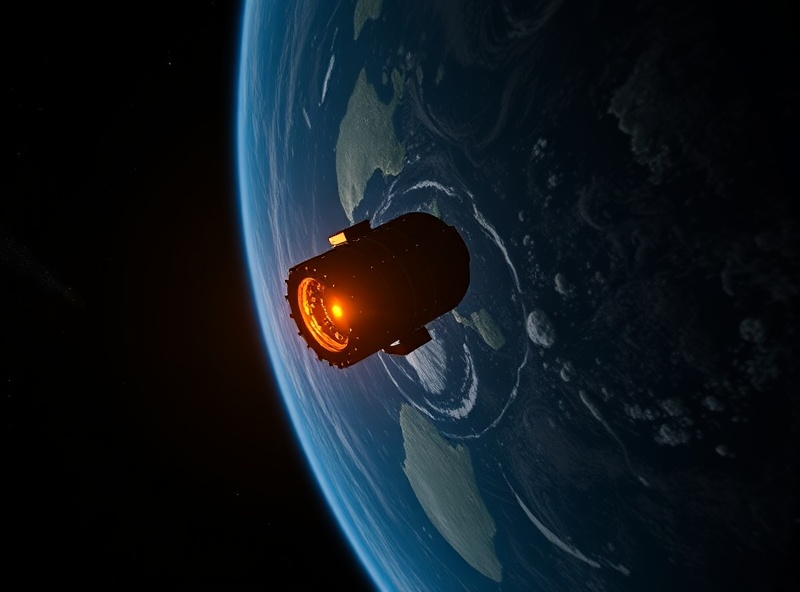
The OSIRIS-REx mission was not simply about Bennu—it was a proof of concept for a new era of space exploration. Humans will venture outward to sample other asteroids, moons, and eventually other planets. Each mission will teach us more about our place in the cosmos.
OSIRIS-APEX: Journey to Apophis
The spacecraft that brought Bennu's samples home has been repurposed for a new mission. OSIRIS-APEX (Origins, Spectroscopy, Interpretation, Resource Identification, Security–Apophis Explorer) is heading to asteroid Apophis.
In April 2029, Apophis will make an exceptionally close approach to Earth—closer than some of our communication satellites. This is the first asteroid large enough to be seen with the naked eye as it passes. OSIRIS-APEX will arrive at that same moment to conduct detailed observations, providing unprecedented data on another near-Earth asteroid.
Other Future Missions
The success of OSIRIS-REx has inspired a wave of asteroid sample return missions:
- • Hayabusa2 (Japan): This Japanese spacecraft has already returned samples from asteroid Ryugu (2020). Scientists are analyzing these samples for insights into asteroid diversity.
- • Luna Missions (Russia, International): Planned missions to return samples from the Moon's south polar region, where water ice may be present.
- • Mars Sample Return (NASA/ESA): A complex, multi-mission campaign to bring rocks from Mars back to Earth for laboratory analysis. This will search for signs of past microbial life on Mars.
- • Europa Clipper & Enceladus Orbiter (Future): These missions will study the icy moons of Jupiter and Saturn, searching for signs of life in their subsurface oceans.
The Broader Vision: Astrobiology & Human Exploration
These missions are part of a larger scientific vision: understanding the prevalence of life in the universe and ultimately venturing to other worlds with human explorers.
In the coming decades, we will:
- → Continue robotic exploration of Mars, Europa, and Enceladus, searching for biosignatures
- → Return human explorers to the Moon and eventually to Mars
- → Develop technologies for long-duration spaceflight and in-situ resource utilization
- → Search for exoplanet atmospheres with signs of life (biosignatures)
- → Build interplanetary infrastructure for sustained human presence beyond Earth
Why This Matters
The Bennu samples are more than scientific specimens. They represent humanity's reaching outward, asking profound questions about our origins and our place in the cosmos. Each sample studied, each atom analyzed, brings us closer to understanding whether life emerged only on Earth or is woven into the fabric of the universe itself.
Perhaps one day, human explorers will stand on the surface of another world and ask themselves the same question: "Did life emerge here, as it did on Earth? Or are all living things, across the galaxy, descended from a common chemical ancestry?"
"We are made of starstuff, and the universe is a way of knowing itself. The exploration of space is, ultimately, the exploration of ourselves."
– Inspired by Carl Sagan
The journey has just begun. The universe awaits.